Meeting nutrient needs on a plant-based diet
Adopting a plant-based diet is becoming increasingly popular as a sustainable approach to better health and well-being. Whether you’re looking to reduce your meat intake or fully embrace a diet rich in fruits, vegetables, legumes, and whole grains, there are a few nutrients you should pay attention to, such as:
Calcium. If you’re a vegetarian, you can find abundant calcium in dairy products such as low-fat, plain yogurt. However, if you are moving toward a vegan diet, you can find plant-based sources of calcium such as fortified plant-based milk, tofu processed with calcium, cruciferous vegetables (for example, broccoli and cauliflower), and pulses (beans, peas, and lentils). Try to get two or three servings per day of calcium-rich plant foods and
consider taking a supplement if you fall short. The Daily Value (average need per day) is 1,000 milligrams (mg) per day for most adults.
Vitamin D. The sunshine vitamin may be obtained through regular exposure to sun (about 5 to 30 minutes a couple of times per week); fortified foods like orange juice, dairy products, or plant-based milk; oily fish such as salmon and tuna; and mushrooms exposed to light. You can consider a supplement if you fall short. The Daily Value for vitamin D is 20 micrograms (mcg) per day.
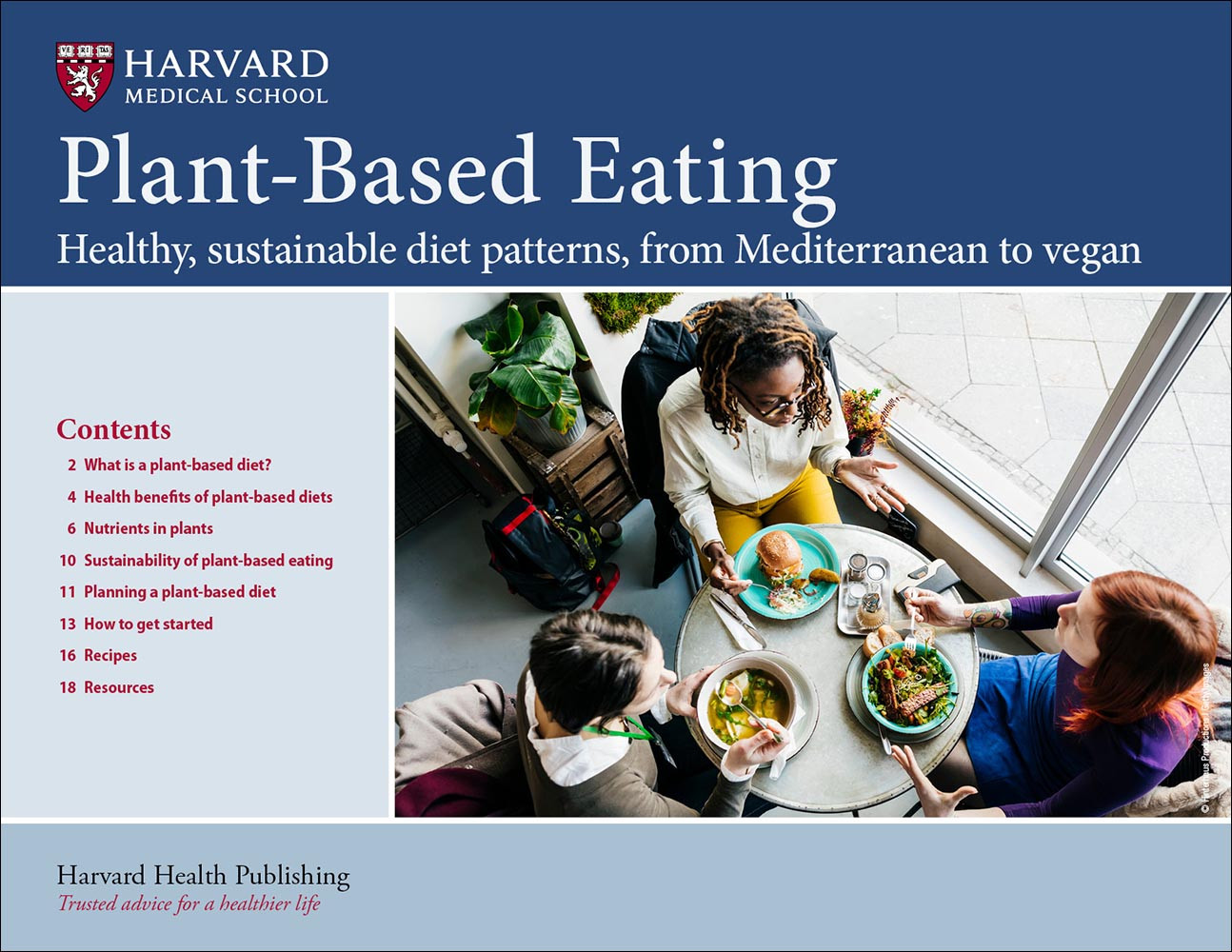
Get your copy of Plant-Based Eating
|
|
For a variety of reasons, many people are interested in cutting back on animal foods such as meat, poultry, fish, dairy products, and eggs. Some of them are motivated by the health benefits of eating more plants. Another main motivator for eating a plant-based diet is its environmental benefits. In addition, many people are interested in decreasing animal food intake because of concerns about animal welfare or for other
moral or religious reasons. The bottom line: more and more people are lightening their intake of animal foods in pursuit of a more sustainable, plant-based lifestyle.
|
|
Vitamin B12. This vitamin cannot be obtained naturally in a diet without animal foods. If you don’t eat meat, dairy products, or eggs, you will need to take a daily supplement, or consume foods fortified with B12 consistently i Even vegetarian diets fall short on B12. The Daily Value for B12 is 2.4 mcg, but higher levels are recommended because this vitamin is not absorbed well.
Iodine. This mineral is found mainly in fish, dairy products, eggs, and chicken. It’s also found in plant foods, but content varies widely. Some types of seaweed contain high levels of iodine, and so does iodized salt. People on vegan diets have been found to fall short of this nutrient and may need a supplement. The Daily Value is 150 mcg per day.
Zinc. Beans, nuts, whole grains, and a variety of other whole-plant foods contain this mineral. The Daily Value is 11 mg per day, but more may be needed because zinc from plant sources is less easily absorbed. While it’s possible to meet your needs on a balanced diet, you may consider a supplement if your intake of zinc-containing foods such as shellfish, eggs, pulses, and grains is limited.
Iron. This mineral is found in fish, eggs, dairy products, and many plant foods, such as beans, lentils, and grains. Vitamin C intake (high in fruits and vegetables) enhances the absorption of iron, which tends to be lower in plant sources of iron. The Daily Value for iron is 18 mg per day. Many people eating a vegan diet are able to consume this much iron. However, you may consider a supplement if you fall short.
To learn more about ways to diversify your diet, purchase Plant-Based
Eating, an Online Guide from Harvard Health Publishing.
Image: © fcafotodigital/Getty Images
|