New medication for urinary tract infections: Will it really help?
For the first time in 20 years, doctors will have a new antibiotic to treat urinary tract infections (UTIs) in women. The FDA approved pivmecillinam (Pivya) in April 2024 — an encouraging development, since germs that cause UTIs have become more resistant to existing medications, making the drugs less effective. Here’s how pivmecillinam might affect treatment.
Get your copy of UTI
|
|
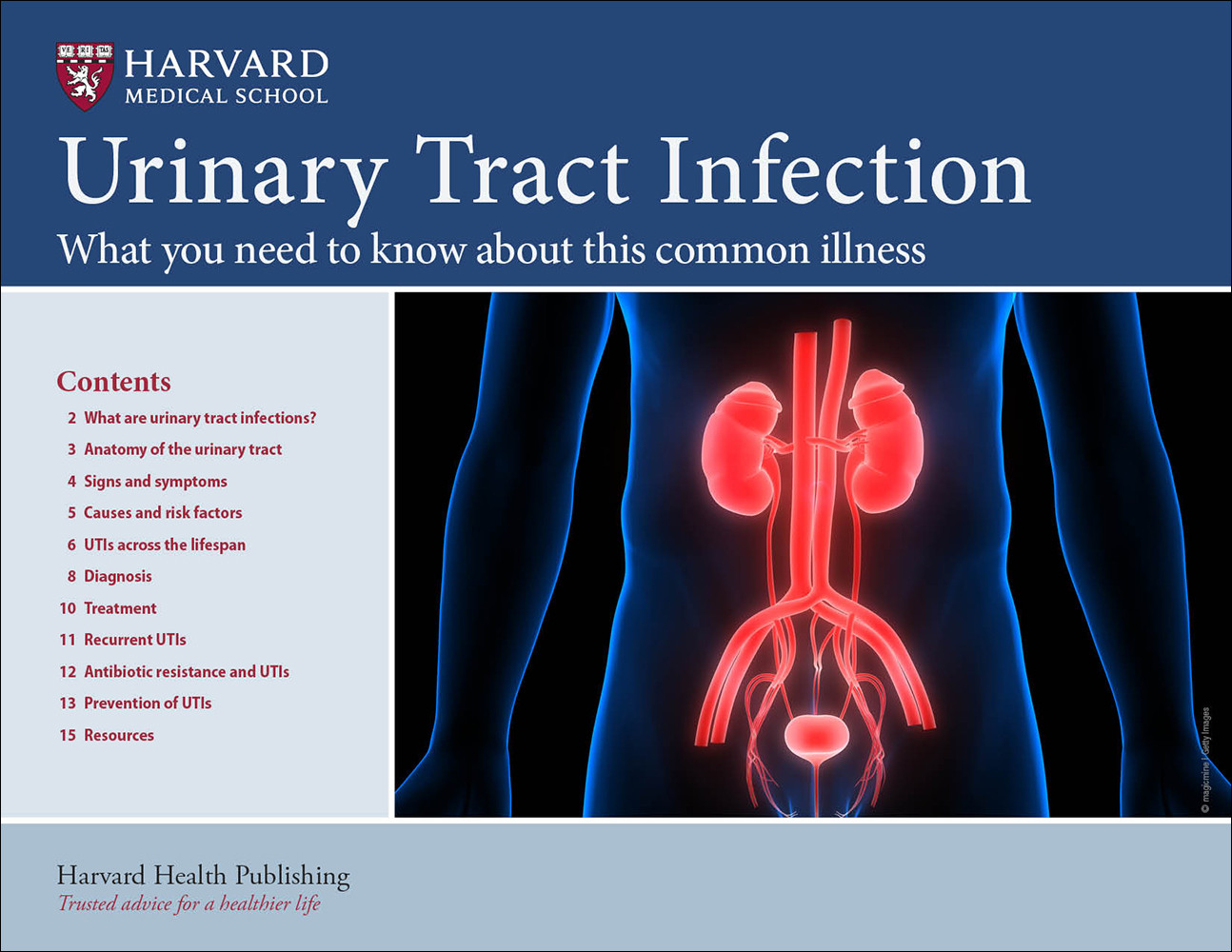
If you’ve experienced a UTI, then you know that this burning, painful, uncomfortable condition is nothing to mess around with. That’s why the health experts at Harvard Medical School have created a guide to help you protect your health. This guide explains how a UTI begins and ways to help prevent infection. It covers the factors that increase risk at all ages, how UTIs are diagnosed, and how they’re treated. The guide
also discusses the growing problem of antibiotic resistance and how this affects treatment for UTI.
|
|
What is it?
Pivmecillinam is a type of penicillin taken orally. It’s been prescribed in European countries more than 30 million times over the past 40 years as a first-line treatment for “uncomplicated” urinary tract infections (those limited to the bladder).
The drug is coming to the United States because a company called Utility Therapeutics acquired the U.S. rights to pivmecillinam and received FDA approval to sell it. The FDA based its approval on data from three clinical trials that supported pivmecillinam’s effectiveness, which ranged from 62% to 72% effective. The most common side effects included nausea and diarrhea.
Will it make a difference?
When pivmecillinam becomes available in the United States (reportedly in 2025), it will join the lineup of existing first-line UTI treatments, which include fosfomycin (Monurol), nitrofurantoin (Macrobid), and trimethoprim/sulfamethoxazole (Bactrim).
And the more options we have, the better. “A large portion of my patients have recurrent UTIs and come in with infection after infection. We often have to cycle through treatment options when we see evidence of antibiotic resistance. I also see a lot of women who experience reactions to certain medications. So it will be nice to be able to turn to another drug on the same tier, instead of jumping to stronger antibiotics. We want to reserve those for more advanced
UTIs that ascend into the upper urinary tract,” says Dr. William Winkelman, a urogynecoligist with Harvard-affiliated Mount Auburn Hospital.
Why do we get UTIs?
The best scenario would be avoiding UTIs altogether, but that becomes more challenging as we age.
UTIs can develop when harmful bacteria begin growing anywhere in the urinary tract: the kidneys, bladder, ureters (the tubes that take urine from the kidneys to the bladder), or urethra (the tube that carries urine from the bladder, out of the body).
Women are particularly susceptible because the female urethra (which opens just above the vagina) is only about an inch and a half long. Nearby bacteria from the rectum that find their way to the opening of the urethra can easily travel the short distance through the urethra to the bladder. This problem becomes greater after menopause, when lower levels of estrogen make the vaginal tissue near a woman’s urethra more vulnerable to infection with harmful
bacteria.
Men rarely get UTIs because of their longer urethra. But later in life, a man’s enlarged prostate gland might block the flow of urine from the bladder, causing urine to pool and creating a breeding ground for bacteria.
Fighting back
Fortunately, we have some ways to ways to ward off UTIs.
In women, using vaginal estrogen cream after menopause helps restore protection. “It’s available as a cream applied twice a week, tablets, or an estrogen ring inserted into the vagina every three months,” Dr. Winkelman says. “Estrogen increases lubrication and healthy bacteria. And preventing UTIs is often about balancing unhealthy bacteria. In extreme cases, some medications can be taken long-term to make the bladder inhospitable to harmful bacteria.”
In men with an enlarged prostate gland, taking certain prescription medications may help to improve urine flow and prevent the buildup of urine in the bladder, which increases the likelihood of infection.
Drug-free approaches
What about drug-free approaches to avoid UTIs, such as taking cranberry extract supplements or emptying the bladder soon after sexual intercourse? “The evidence that those approaches help is mixed,” Dr. Winkelman says. “It won’t hurt to try them, and many of my patients have benefited from these interventions, but some people are just more prone to UTIs than others.”
Just watch for UTI symptoms, such as a burning feeling with urination, an urgent or frequent need to urinate, bloody or cloudy urine, fever, or confusion, and report them to your doctor as soon as possible.
For more on information on recurrent UTI’s, check out Urinary Tract
Infection, a Special Health Report from Harvard Medical School.
Image: © Sohel_Parvez_Haque/Getty Images
|